
The Rule of Thirds: Why Professional Framing is the Foundation of B2B Video

When recording a B2B podcast, most hosts primarily focus intensely on the audio chain: the microphone, the preamp, and the room acoustics.
While high-quality sound is the baseline, the visual presentation often dictates the perceived authority of the brand.
Video has become a dominant distribution engine with over 70% of podcast enjoyers tuning into YouTube for their favorite show.
That said, a poorly framed shot can distract the viewer and undermine even the most insightful interview.
Improper framing (shots with too much headroom, off-center placement, or “nose-cam” angles) creates a visual barrier between the host and the audience.
To correct this, creators should return to a fundamental principle of photography and cinematography: The Rule of Thirds.
Understanding the Grid
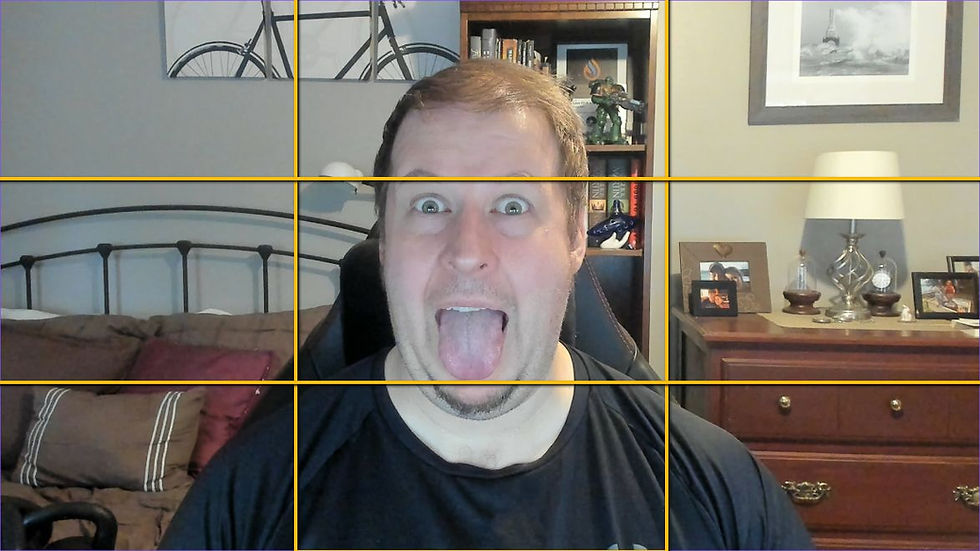
The Rule of Thirds involves mentally (or digitally) dividing your video frame into nine equal boxes using two horizontal and two vertical lines.
This creates a grid that acts as a blueprint for professional composition.
By positioning key elements along these lines or at their intersections, you create a balanced image that feels natural to the human eye.
For a standard head-and-shoulders podcast shot, there are three specific markers to hit:
Eye Placement: Your eyes should sit on the top horizontal line, specifically in the top third of the center box. This prevents the “miles of headroom” look where the host appears to be sinking to the bottom of the screen.
Headroom: Ensure there is roughly one-third of a box of empty space between the top of your head and the top of the frame. This provides a professional buffer that keeps the shot from feeling cramped.
Horizontal Centering: You should be positioned exactly in the middle of the center vertical column. Being consistently off-center creates a lopsided visual that makes the two-shot side-by-side layout look disjointed.
The Impact of Camera Focal Length
Beyond the grid, your camera’s field of view plays a significant role in how you are framed.
Many modern webcams and DSLRs offer adjustable “sizes” or degrees of zoom. Experimenting with these settings is vital.
A 90-degree wide-angle lens might capture too much of your room, making you look distant and small.
Narrowing that angle to 65 degrees often provides a tighter, more intimate frame that keeps the focus on the speaker.
Finding the “gold or silver” spot ensures you aren't so close that you are “all face,” yet not so far that your facial expressions are lost.
Why Podcast Video Framing Matters for Distribution
The importance of framing extends far beyond the live recording.
When you repurpose your podcast into vertical micro-clips for LinkedIn or YouTube Shorts, proper framing becomes a mechanical necessity.
If a guest is framed poorly in the original landscape recording, cropping into a vertical 9:16 format becomes a nightmare.
You may find yourself with a clip that is consistently off-center or one that cuts off the top of the speaker's head no matter how you stretch the video.
Starting with a correctly framed 16:9 shot ensures that your assets remain versatile for every platform. This basic technical habit ensures that your content looks professional, regardless of how or where it is consumed.
If your team is struggling to achieve a high-end look for your remote recordings, contact Westport Studios today!
We provide the technical oversight and host coaching necessary to ensure you and your guests look as good as you sound.


Comments